
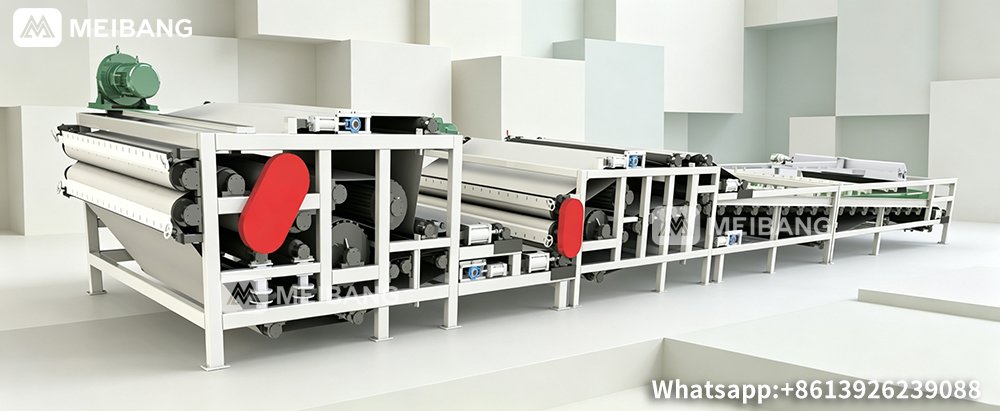
Belt filter press dewatering working principle and process flow
Sludge is delivered into the dynamic or static mixer by a sludge pump, where it is thoroughly blended and fully reacted with 0.05–0.1% anionic or cationic flocculant solution. Fine solid particles and suspended substances in the slurry coagulate into large loose flocs, releasing bound water and surface water from the materials into free water.
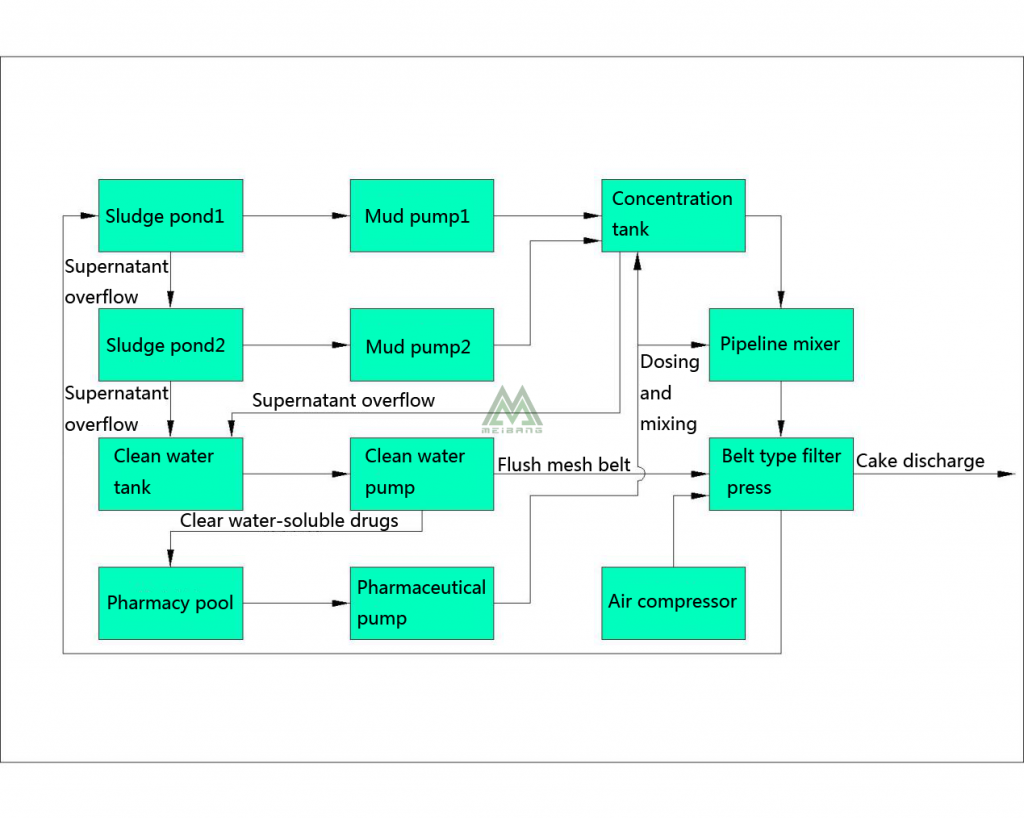
The treated material is evenly distributed onto the filter belt of the gravity pre-dewatering section or belt thickener. Under natural gravity, free water permeates through the filter belt and separates out, turning the sludge into a non-flowing state. Afterwards, the sludge enters the pressure dewatering zone and is sandwiched between the upper and lower filter belts. As the belts move forward, the adjustable-tension filter belts, together with rollers of gradually reduced diameter, generate continuous slow squeezing and shearing force.
Moisture inside the slurry is gradually squeezed out through the wedge zone, low-pressure zone, medium-pressure zone, high-pressure zone and strong clamping zone. Finally, low-moisture filter cake is formed and discharged by the scraper. The upper and lower filter belts then separate and are cleaned with high-pressure washing water to remove tiny particles trapped in the belt pores, ready for the next dewatering cycle.
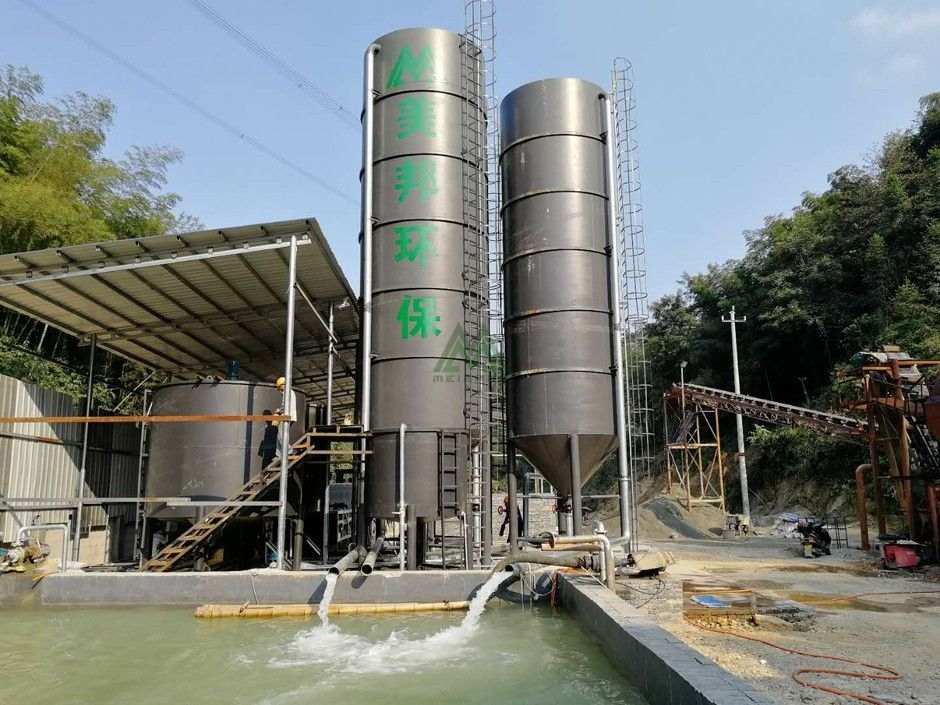
After mechanical pressing, the sludge turns into solid filter cake with no water seepage, while clean water is separated out. The dried mud cake can be transported for landfill or resource reuse, and the discharged clean water can be recycled onsite, fully complying with environmental protection standards.