
Mebon Filter Press for Efficient Coco Peat and Sludge Dewatering
Types, Size and Specifications
| Types | DYQ1000P3 | DYQ1500P3 | DYQ2000P3 |
| Main motor Power(kw) | 5.5kw | 7.5kw | 11kw |
| UnitPower(kw) | 11.5kw | 13.5kw | 18kw |
| Belt Width(mm) | 1000mm | 1500mm | 2000mm |
| Output Capacity(ton/h) | 1.8-2 | 2.2-2.5 | 2.6-3 |
| Long(m) | 4.5 | 4.5 | 4.5 |
| Width(m) | 1.85 | 2.3 | 2.85 |
| High(m) | 2.85 | 2.85 | 2.85 |
| Weight(tons) | 4.5 | 5.5 | 7.0 |
| moisture content | 50%–55%(After dewatering) | ||
Coco peat dewatering
Once the husks have arrived in production plants, they will stay for at least six weeks, after which further processing can begin. Then beat husks to remove the fibres, which leaves us with coco peat.
Washing and desalt
After sieving and wahing the coco peat by our dewatering machine. Removing elements in water, such as potassium, sodium and chloride. The salt content will be as EC < 1.0 mS/cm. In addition to this, we can also buffer the coco peat, in order to remove monovalent positive ions such as potassium from the coconut complex. In this way, we remove not only elements in water but also elements in the coconut complex. After dewatering, EC value will be within 0.5.

Coco peat processing
Automatic feeder, spreading the raw materials to a certain thickness of about 5cm, to facilitate the next step to dewatering. After washing, the raw materials arrive at the first set of press rollers, in the meantime adjusting the pressure to 0.35Mpa. The material reaches the second group of press rollers, in the meantime adjusting the pressure to 0.4Mpa.
This way, the material enters a third set of press and press rollers to tune up the pressure to reach the value of 0.5Mpa.
Finally, due to three sets of roller presses’ dehydrations, EC value decreased under 0.4%, while its moisture content goes down till approximately 55%.
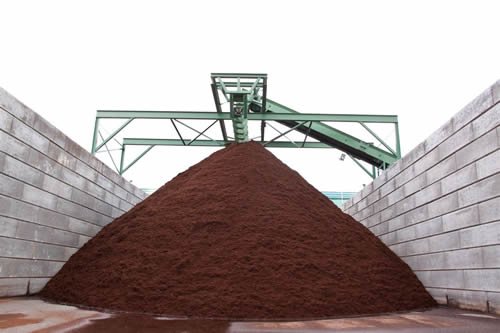
Applications of Dewatered Cocopeat
Cocopeat finds uses in several applications once dewatered, including:
Soil Conditioning: Dewatered coco peat is used to improve soil structure, water retention, and agriculture as well as gardening.
Hydroponics and Greenhouses: It serves as a growing medium in hydroponics systems and green house farming, where moisture control is critical.
Seedling Production: Dewatered cocopeat is ideal for seed growing, because it provides a standard moisture environment for healthy root development.
Packaging and Export: The dewatered coco peat, on the other hand, is easier to compress and package in block form for convenience in storage and export.
Managing sludge efficiently is a big deal for many industries. It helps cut down waste, protect the environment, and even recover valuable materials. A sludge processing machine is designed to handle different types of sludge, whether from food production, mining, or paper manufacturing. Using advanced separation, dewatering, and drying technologies, these machines make waste management easier and more effective.
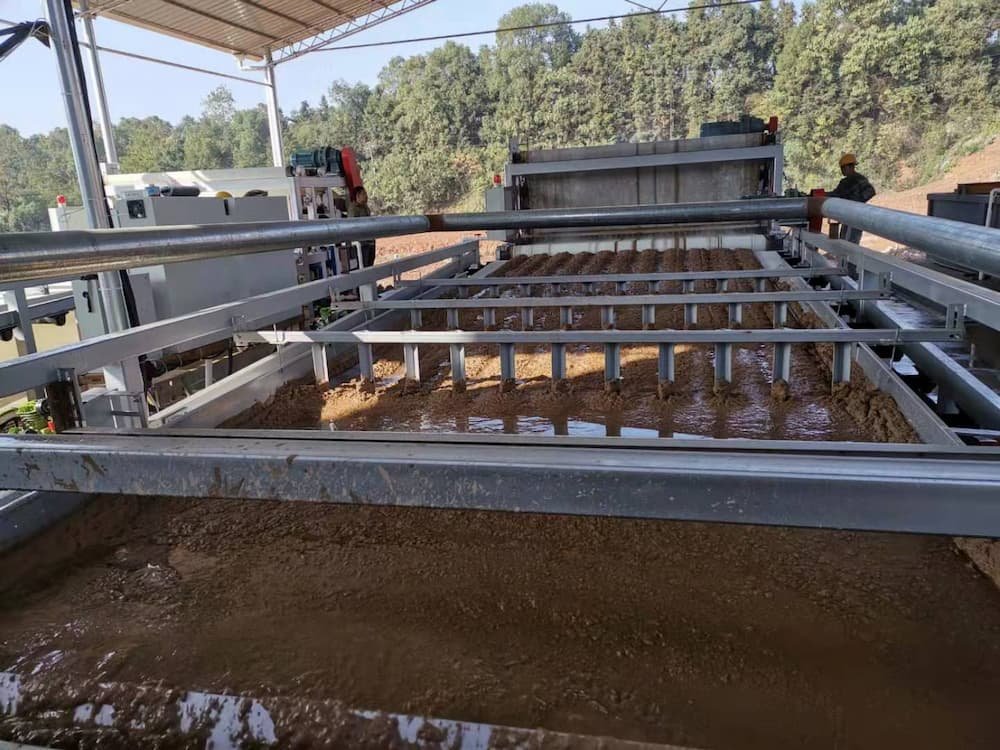
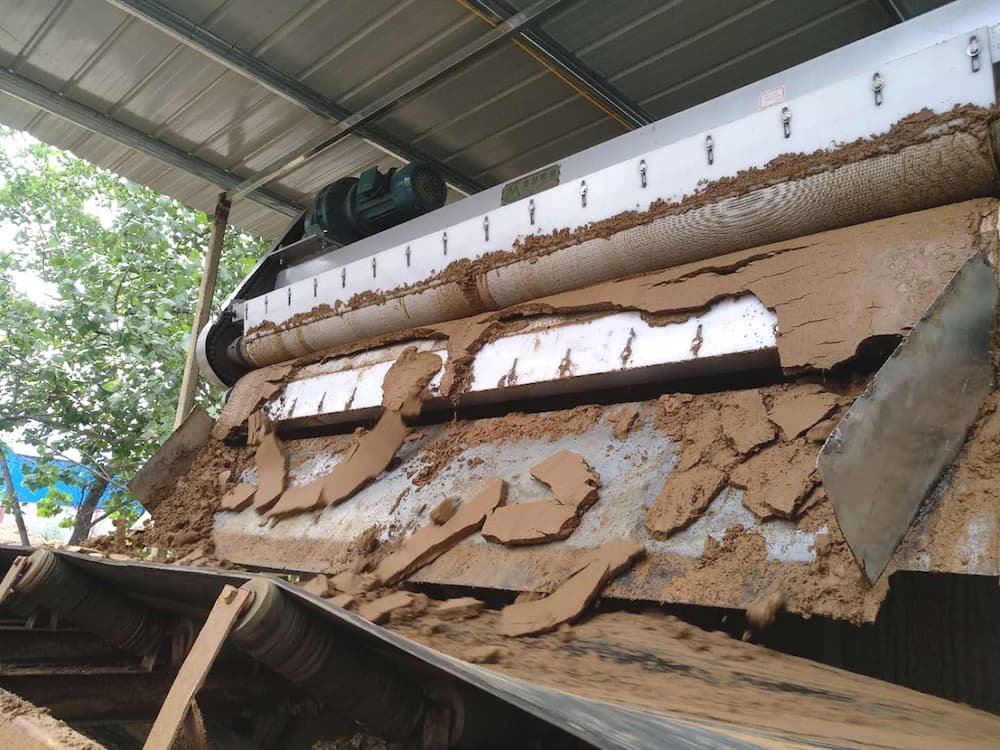
Sludge Processing for the Food Industry
The food industry produces a lot of sludge from various processes like wastewater treatment and food production. A sludge processing machine can help by:
- Reducing Waste Volume: Dewatering sludge to make disposal easier and cheaper.
- Recovering Valuable Resources: Extracting useful materials like fats, oils, and organic matter.
- Meeting Environmental Standards: Ensuring compliance with waste management regulations.
- Supporting Sustainability: Converting organic sludge into biogas or compost.
With advanced filtration systems, automated controls, and energy-efficient operations, these machines help food businesses handle sludge more efficiently.